
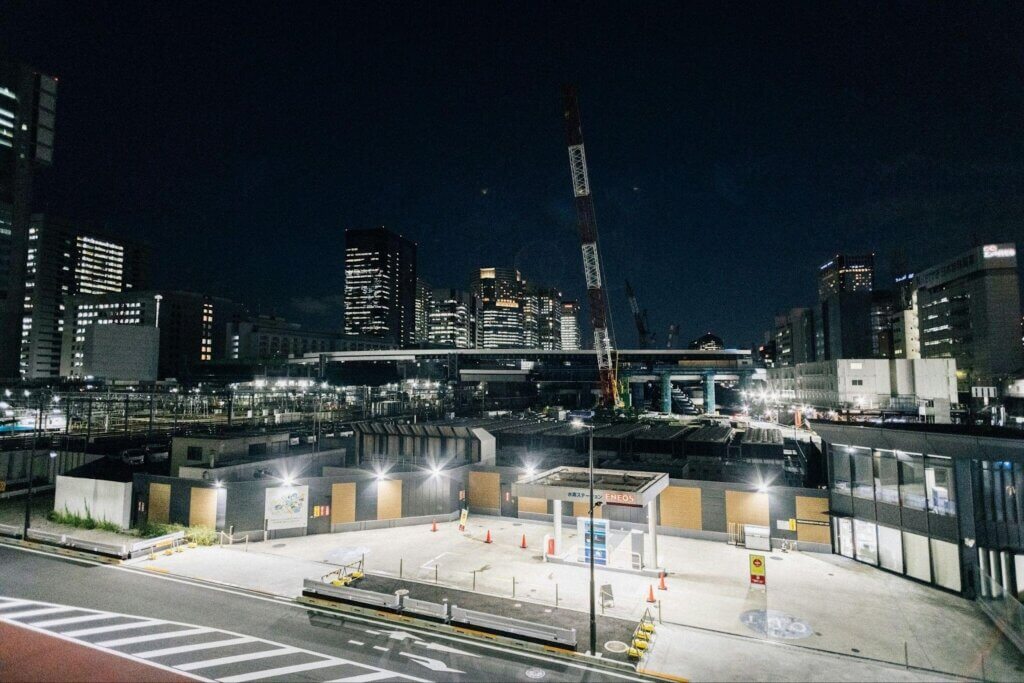
Lakewood, Colorado construction sites face predictable overnight risks—equipment theft, copper wire removal, trespassing, and vandalism that can delay schedules and drive up costs. Jobsites operate with temporary fencing, multiple access points, and shifting layouts that make traditional “lock and leave” approaches insufficient. A professional security guard company in Lakewood, CO provides the visibility, documentation, and deterrence that helps project managers sleep easier while keeping your site on schedule.
Why Lakewood Jobsites Need an Overnight Security Plan (Beyond “Lock the Gate”)
Construction sites present unique security challenges that standard commercial properties don’t face. You’re managing multiple entry points that change weekly as phases progress. Subcontractor traffic creates access control complications—who’s authorized, who’s finishing late, and who shouldn’t be there at all. Temporary fencing provides a visual boundary but rarely stops a determined intruder. Equipment and materials sit in staging areas, often visible from the street or adjacent properties, making them easy targets.
Schedule pressure means crews sometimes leave gates unlocked, tools unsecured, or high-value materials exposed overnight. The goal of professional security isn’t to guarantee prevention—that’s unrealistic. Instead, it’s about increasing deterrence through visible patrols, documenting what’s happening on your site when no one else is there, and escalating issues faster when something doesn’t look right. Good security supports your project rather than replacing common-sense site management.
The 3 Most Common Overnight Coverage Options
Construction site security typically falls into three categories, each suited to different jobsite layouts and risk profiles.
Vehicle patrol involves scheduled rounds where a security vehicle drives the perimeter, checks gates and access points, notes equipment positioning, and documents anything unusual. Patrol frequency varies based on your needs—hourly, every two hours, or custom schedules tied to your project phases.
Scheduled patrol checks combine vehicle patrol with foot patrol verification of specific checkpoints. Guards exit the vehicle to inspect gates, equipment yards, material storage, and trailer access. Security patrol services document each checkpoint with timestamps and photos, creating an audit trail that proves coverage happened as scheduled.
On-site guard presence stations a uniformed guard at your jobsite throughout the overnight shift. The guard monitors the main gate, performs interior rounds, responds immediately to alarms or unusual activity, and serves as a visible deterrent. On-site coverage costs more but provides the fastest response when issues develop.
Most construction sites don’t need all three approaches. The right fit depends on your site size, equipment value, neighborhood conditions, and project timeline.
When Vehicle Patrol Is the Best Fit for a Lakewood Construction Site
Vehicle patrol security works well in specific scenarios where constant on-site presence isn’t justified but overnight visibility matters:
- Large perimeter sites where walking the entire property takes significant time
- Scattered material staging across multiple lots or phases
- Equipment left overnight in visible but fenced areas
- After-hours-only risk where daytime has adequate crew presence
- Rotating project phases where security needs shift weekly
- Remote corners or back gates that need periodic verification
- Budget-conscious coverage for sites with infrequent incidents
- Multi-site projects where one patrol vehicle covers several locations in a rotation
Vehicle patrol provides documented proof of coverage—timestamps, photos, and written notes—without the cost of full-time staffing. It’s particularly effective when combined with good perimeter lighting and clear “No Trespassing” signage.
When On-Site Guards Make More Sense Than Patrol Alone
Certain jobsite conditions require immediate response capability and constant monitoring that vehicle patrol can’t provide:
- High-value equipment like excavators, generators, or specialized machinery
- Frequent trespassing issues documented in previous project phases
- Complex access control with late-finishing subcontractors and early morning deliveries
- Multiple crews finishing at different times requiring gate coordination
- Material deliveries scheduled for early morning before site leadership arrives
- Active theft patterns in the surrounding area affecting similar projects
- Coordination with hot permits or fire watch requirements (when applicable)
- Interior building security for projects with enclosed structures needing interior rounds
Construction site security guards stationed on-site can immediately address issues, coordinate with arriving vendors, and provide real-time communication to project managers when situations develop overnight.
The Night-Shift Checklist (What to Secure, Verify, and Document)
Whether you’re using patrol or on-site guards, consistency matters. Here’s what should be verified and documented during overnight coverage:
Perimeter & Access Points
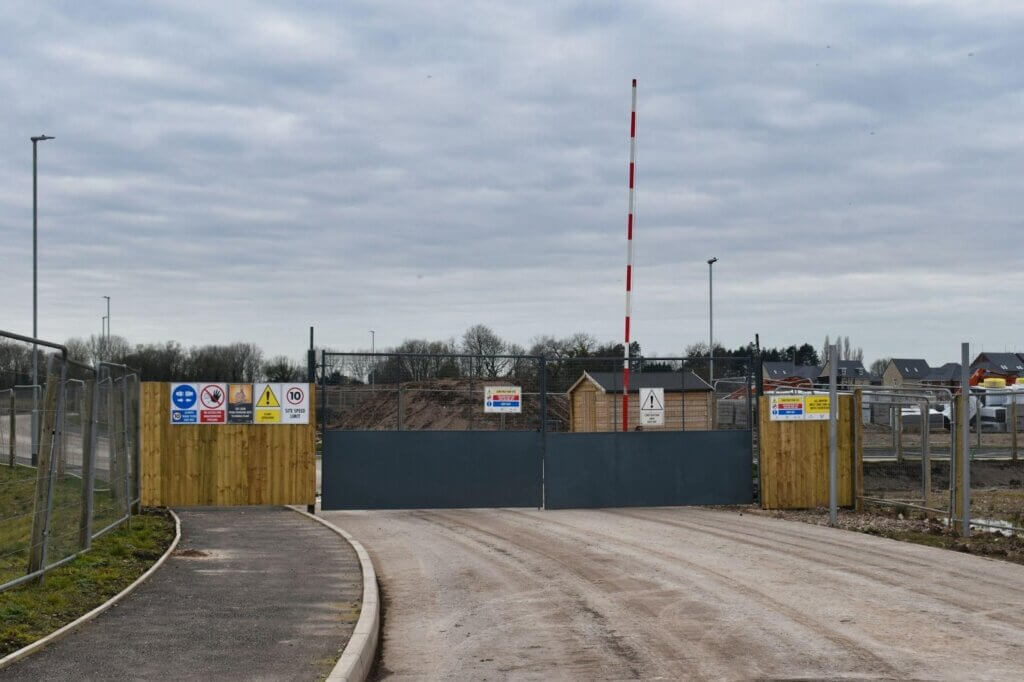
- All gates are closed and secured according to post orders
- Chain locks are properly engaged (not just looped through)
- Temporary fencing sections are intact with no gaps or damage
- “No Trespassing” and site rules signage is visible and undamaged
- Pedestrian access points are identified and secured
Equipment & Materials Staging
- High-value equipment positioned according to site plan
- Tool trailers and job boxes are locked and undisturbed
- Material pallets (lumber, piping, HVAC units) are present and staged as expected
- Fuel storage tanks are secured and show no signs of tampering
- Generator status noted (running/off) per site requirements
Lighting & Visibility
- Perimeter lighting is functioning as expected
- Dark zones or burned-out lights are documented and reported
- Temporary lighting towers are operational
- Motion-activated lights trigger appropriately during rounds
Safety Observations
- Blocked exits or egress routes are noted and reported
- Open trenches or excavations have proper barriers and warning signs
- Ladders secured or stored, not left accessible
- No signs of fire, smoke, or electrical hazards
- Spills, debris, or trip hazards documented for morning crew
Documentation & Escalation
- Timestamp and location noted for every checkpoint
- Photos taken of anomalies, damaged fencing, or equipment concerns
- Any unusual vehicles or individuals documented with descriptions
- Immediate escalation to site contact for active trespassing or damage
- Written shift reports completed before end of coverage
- Follow-up items flagged for site leadership review
What “Good Patrol Reporting” Looks Like (So You Can Take Action)
Effective security reporting gives you the information needed to make decisions, adjust coverage, and document incidents for insurance or legal purposes. Reports should include:
- Precise timestamps for each patrol round or checkpoint verification
- Specific locations (north gate, equipment yard, south perimeter, etc.)
- Photo documentation of gate positions, equipment staging, and any anomalies
- Anomalies and observations written in factual, objective language
- Corrective actions taken (gate re-secured, notification made, incident escalated)
- Follow-up recommendations based on patterns observed over multiple shifts
- Weather and site conditions that might affect equipment or materials
Consistent reporting helps you identify patterns—repeated gate issues, lighting problems in specific areas, or times when trespassing is most common. This documentation also supports insurance claims if theft or vandalism does occur, providing evidence of security measures in place.
Temporary Security for Short-Term Needs (Storm Damage, Schedule Shifts, Equipment Staging)
Not every project needs full-term security contracts. Temporary security services address short-term vulnerabilities without long-term commitments:
- Project phase changes when high-value equipment arrives for specific installation periods
- Storm damage protection when weather events leave materials or structures exposed
- Schedule shifts that leave the site unmanned during unusual hours
- Equipment staging before major installation days
- Strike or layoff periods when normal crew presence is interrupted
- Weekend concrete pours or other extended operations
- Holiday periods when construction pauses but materials remain on-site
- Temporary utility shutdowns requiring monitoring during service interruptions
Temporary coverage can be scheduled by the day, week, or month, then scaled back when risk decreases. This flexibility helps manage security budgets while addressing genuine vulnerabilities.
Mistakes That Make Jobsite Security Less Effective (and Fixes)
Even good security plans fail when execution is inconsistent. Here are common mistakes and how to fix them:
Predictable patrol routines – Fix: Vary patrol times within scheduled windows so patterns aren’t obvious from outside observation.
Unclear post orders – Fix: Provide written instructions specifying which gates to check, what equipment to verify, and who to call for different situations.
Poor lighting maintenance – Fix: Assign someone to test perimeter lights weekly and replace burned-out bulbs immediately.
Too many access points – Fix: Consolidate entry points when possible; lock unused gates permanently during certain project phases.
No subcontractor access log policy – Fix: Require sign-in/sign-out for all after-hours work with advance notice to security.
No escalation contacts – Fix: Provide security with primary and backup contacts for site management, including cell numbers.
Ignoring camera blind spots – Fix: Walk the perimeter with your security provider to identify coverage gaps in both cameras and patrol routes.
Not updating the plan by phase – Fix: Review security post orders monthly as project phases change and site layout evolves.
Questions to Ask Before Hiring Construction Site Security in Lakewood
Finding the right security partner requires asking specific operational questions:
- What licensing and insurance do your guards carry in Colorado?
- How are guards trained on construction site safety and hazards?
- Can we review sample post orders before service starts?
- How do you verify that patrols happen on schedule?
- What’s your backup staffing plan if a guard calls off?
- How often do supervisors conduct quality checks on our site?
- What’s the communication protocol during overnight shifts?
- How quickly are incident reports delivered to site management?
- Do you provide daily summaries or only exception-based reporting?
- What happens if security identifies an active trespasser?
- Can coverage be adjusted as project phases change?
- How do you coordinate with our site superintendent on access changes?
FAQs
How many patrol visits do we need overnight?
It depends on your site size, equipment value, and neighborhood conditions. Smaller sites with basic materials might need checks every 2-3 hours. Sites with high-value equipment or documented trespassing issues often benefit from hourly patrols. Some projects use hybrid approaches—frequent patrols during high-risk evening hours, then less frequent checks after midnight. Your security provider should recommend a schedule after walking your site.
Is vehicle patrol enough for a construction site?
For many sites, yes—especially when combined with good perimeter fencing, lighting, and clear signage. Vehicle patrol provides documented deterrence and catches most issues before they escalate. However, sites with frequent access control needs, high-value equipment, or complex overnight operations often need on-site guard presence for immediate response capability. Consider your site’s specific vulnerabilities rather than assuming one approach fits all.
What should we include in post orders for security?
Post orders should specify which gates to check and in what sequence, what equipment or materials to verify, who to contact for different situations (trespassing, damage, safety hazards), what requires photos versus written notes, and how to handle late-working subcontractors. Include site maps with checkpoint locations marked. Update post orders whenever project phases change or new equipment arrives.
Can we start with short-term coverage and extend it?
Absolutely. Many construction projects begin with temporary coverage during high-risk phases—equipment delivery periods, rough-in stages when copper and HVAC units are on-site, or final finishing when tools and fixtures are vulnerable. If conditions warrant ongoing coverage, temporary agreements convert to longer-term contracts easily. This flexibility helps manage budgets while addressing real risks.
What’s the difference between patrol checks and an on-site guard?
Patrol checks involve scheduled visits—vehicle patrol drives the perimeter, checks gates and equipment, documents observations, then continues to other sites or patrols. Visits might occur every 1-3 hours depending on your schedule. On-site guards remain at your jobsite for the entire shift, providing constant presence and immediate response. Patrols cost less but provide periodic coverage; on-site guards cost more but offer continuous monitoring.
What should be documented if something seems off?
Document everything factually and objectively. Note the time, location, what appeared unusual (gate found open, equipment moved, unfamiliar vehicle present, damaged fencing), photos if possible, and any action taken (gate re-secured, site contact notified, authorities called). Avoid assumptions about intent—just document observations. This creates a record for site management to review and decide whether additional action is warranted.
Conclusion
Construction site security in Lakewood, CO works best when tailored to your specific jobsite conditions, project phases, and budget realities. Whether you need overnight vehicle patrol for a large perimeter site or on-site guards for high-value equipment protection, the right approach balances deterrence, documentation, and practical risk management. A site walk with an experienced security provider can identify vulnerabilities and recommend coverage that makes sense for your timeline and risk profile. Request a quote to discuss overnight security options for your Lakewood construction project.
