
Lakewood, Colorado is home to thriving retail corridors, shopping plazas, and neighborhood centers where customer experience matters just as much as loss prevention. For store owners and property managers, the challenge isn’t just addressing theft or loitering—it’s doing so in a way that keeps your environment welcoming, professional, and safe for everyone. A well-designed security guard company in Lakewood, CO focuses on visibility and service, not intimidation, so your team can focus on running a great business.
The Goal: Safer Stores AND a Better Customer Experience
Effective retail security doesn’t rely on aggressive tactics or creating an uncomfortable atmosphere. Instead, it balances deterrence with customer service, clear procedures, and consistent reporting. Here are the principles that define customer-friendly security:
- Visibility over intimidation – Uniformed presence that’s approachable and professional
- Service-oriented approach – Guards trained to assist customers, answer questions, and provide directions
- De-escalation first – Calm communication and conflict avoidance before situations intensify
- Clear boundaries – Defined roles so security supports store policies without overstepping
- Observation and documentation – Detailed incident reports that help management make informed decisions
- Consistent response protocols – Everyone knows when to escalate and when to assist
- Coordination with staff – Security works as part of the team, not separate from it
Common Retail Security Problems in Lakewood
Retail environments face predictable challenges that vary by store type, location, and hours of operation. Shoplifting patterns often shift based on merchandise type and store layout. Refund fraud signals may include repeated returns without receipts, unusual purchasing patterns, or coordination between multiple individuals. Loitering near entrances, restrooms, or parking areas can create discomfort for customers and staff alike.
Disruptive behavior—whether from intoxicated individuals, verbal conflicts, or aggressive panhandling—impacts the shopping experience and requires calm, professional response. Employee safety becomes a concern during opening and closing hours, especially in dimly lit parking areas or when handling cash. Loading dock access, dumpster areas, and service corridors present additional vulnerabilities. Addressing these issues requires observation, documentation, and coordination with management rather than confrontation.
What Works Inside the Store (Without Feeling Aggressive)
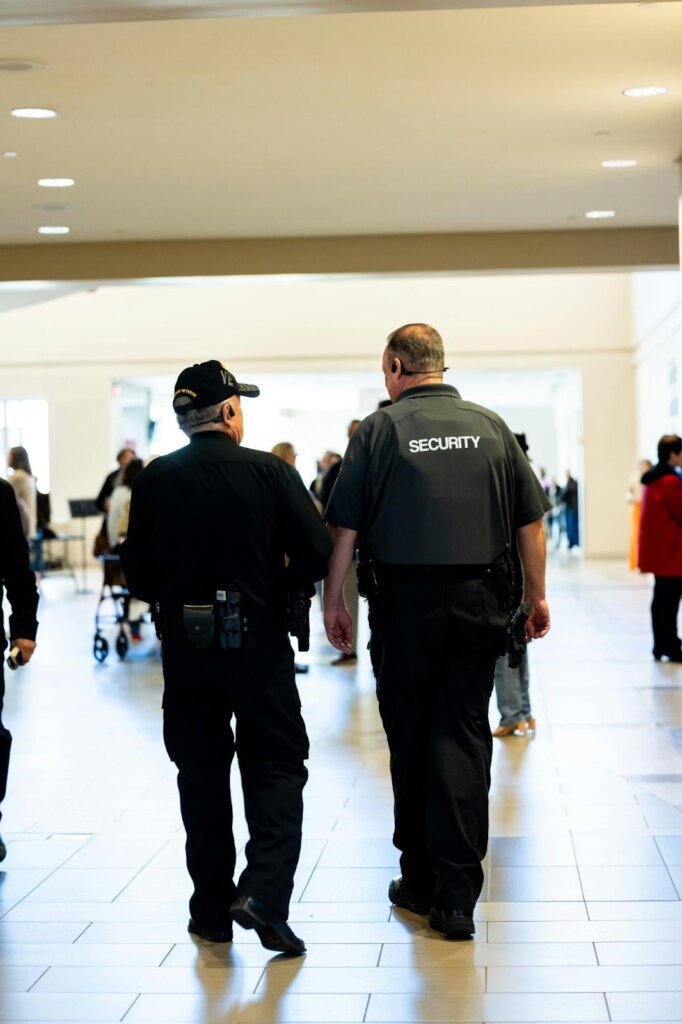
The most effective interior security starts with a welcoming presence near entrances. Customers should see a uniformed guard who greets them, provides assistance, and maintains awareness of who’s entering and exiting. Receipt checks or exit visibility are handled courteously, with explanations provided when needed. Fitting room awareness means monitoring traffic patterns without hovering or making customers uncomfortable.
On-site security guards provide staff support during busy periods, assist with customer conflicts before they escalate, and serve as a point of contact when something feels off. Their role centers on observation and reporting—documenting incidents thoroughly so management has the information needed to address patterns or make policy adjustments. Conflict avoidance is the priority; guards are trained to defuse situations verbally and call for management or authorities when appropriate.
Floor + Entry Coverage Checklist
- Greet customers entering and exiting with a friendly, professional demeanor
- Monitor entrance and exit traffic patterns throughout shifts
- Assist customers with directions, store information, or general questions
- Observe and document suspicious behavior without confrontation
- Maintain visibility in high-value merchandise areas through scheduled rounds
- Note fitting room traffic and unusual patterns (multiple trips, large quantities)
- Communicate with floor staff about incidents or concerns in real-time
- Document receipt checks, exit interactions, and any refusals professionally
- Report merchandise concealment observations to management immediately
- Support staff during customer conflicts by providing calm, neutral presence
- Record all incidents with time, location, involved parties, and actions taken
- Coordinate with managers on trespass warnings or requests to leave
- Check emergency exits during operating hours for secure closure and signs of tampering per site policy (avoid triggering alarms unless authorized)
- Provide written shift summaries noting unusual activity or trends
Parking Lots, Loading Areas, and After-Hours: Where Vehicle Patrol Shines

Parking lot security extends your coverage beyond the building itself. Vehicle patrol security focuses on perimeter checks, lighting observations, and verifying that doors and gates are secure. Guards note suspicious vehicles, check for broken windows or vandalism, and document anything out of place. For staff closing late, patrol can provide escorts to vehicles, adding a layer of reassurance during vulnerable hours.
Loading areas and dumpster zones often lack the visibility of customer entrances, making them targets for unauthorized access or dumping. Patrol verifies these areas are clear, notes any tampering with locks or fencing, and reports maintenance needs like burned-out lights or damaged gates.After-hours checks help strengthen overnight security by confirming agreed checkpoints—doors, gates, lighting, and perimeter access—without the cost of around-the-clock staffing.
After-Hours/Perimeter Checklist
- Patrol all parking lot sections and note vehicles present after closing
- Check lighting in parking areas and report outages or dark zones
- Verify all customer entrance doors are locked and secure
- Inspect loading dock doors, gates, and service entrances
- Document any suspicious vehicles, loitering individuals, or unusual activity
- Visually check panic hardware and emergency exits from the exterior (where accessible) for damage or tampering per site policy (do not trigger alarms unless authorized)
- Check dumpster enclosures for unauthorized access or dumping
- Note any graffiti, vandalism, or property damage
- Verify perimeter fencing and gates are intact and closed
- Provide vehicle escorts for closing staff upon request
- Report maintenance issues (broken locks, damaged gates, standing water)
- Document all patrol stops with timestamps and observations
Picking the Right Setup: On-Site Guards vs Patrol vs Hybrid
Choosing between on-site coverage, vehicle patrol, or a hybrid approach depends on your specific environment, hours, and incident history. Retail security services can be tailored to match your needs rather than forcing a one-size-fits-all solution.
On-site guards work best when you have:
- High daily foot traffic with constant customer flow
- Frequent incidents requiring immediate response
- Multiple entrances that need monitoring simultaneously
- High-value or frequently targeted merchandise
- Customer service expectations alongside security needs
- Staff who need support during conflicts or difficult customers
- Operating hours that span early morning through late evening
- Busy checkout areas where receipt verification is standard
Vehicle patrol is ideal for:
- Large parking lots serving multiple storefronts
- Strip malls or shopping centers with spread-out tenants
- Overnight and after-hours coverage needs
- Properties where incidents are infrequent but security presence deters problems
- Locations needing periodic checks rather than constant coverage
- Perimeter security for fenced or gated properties
- Budget-conscious coverage across multiple buildings
- Properties where closing staff need occasional escorts
Hybrid approaches combine the best of both:
- Daytime on-site guard at main entrance plus nighttime vehicle patrol
- Weekend and holiday surge coverage with on-site guards during peak shopping
- Plaza-wide vehicle patrol with dedicated on-site guard at anchor tenant
For multi-tenant shopping centers, shopping mall and shopping center security often requires coordination across property management and individual retailers. Commercial security services can address both common area coverage and tenant-specific needs through flexible scheduling and clear communication protocols.
Store Teams + Security: How to Work Together (So Everyone’s Consistent)
Security works best when your entire team understands roles, escalation procedures, and documentation expectations. Here’s a framework for keeping everyone aligned:
Incident Escalation Tree:
- Security observes and documents
- Security notifies store management for policy violations or conflicts
- Management decides on trespass warnings, requests to leave, or involving authorities
- Security assists with communication and coordinates with responding officers if needed
- All parties complete incident reports before end of shift whenever possible (or within 24 hours per site policy)
When to call management: Customer conflicts, suspected theft observations, requests to leave the property, trespass warning enforcement, employee safety concerns, medical emergencies.
When to call authorities: Active threats, weapons, physical altercations, medical emergencies requiring paramedics, suspected crimes in progress, trespass violations after warnings issued.
Trespass warnings policy (general): Procedures vary by property rules and local requirements—final post orders should align with management policy and applicable local law.
Documentation standards: Every incident gets a written report, photos taken when appropriate and policy-compliant, witness statements collected, follow-up actions noted.
Staff communication: Daily shift summaries shared with management, weekly trend reports highlighting patterns, immediate notification for serious incidents, regular coordination meetings between security and store leadership.
What Should Be in an Incident Report
- Date and exact time of incident
- Specific location (entrance, aisle number, parking section)
- All parties involved with descriptions (no assumptions about intent)
- Sequence of events in chronological order
- Actions taken by security and staff
- Witness names and contact information
- Management notifications made and responses
- Whether authorities were called and case numbers if applicable
- Photos or video timestamps if available
- Follow-up actions required
- Guard name and signature
Questions to Ask Before Hiring Retail Security in Lakewood
Finding the right security partner means asking detailed questions about training, operations, and accountability. Here’s what to cover:
- What licensing and insurance do your guards carry in Colorado?
- How do you train guards on de-escalation and customer service?
- What’s your staffing reliability and backup plan for call-offs?
- Can we review sample post orders before service starts?
- Do guards have radio or dispatch support during shifts?
- Can we see examples of incident reports your team produces?
- How often do supervisors conduct site checks and quality reviews?
- For vehicle patrol, how do you verify rounds are completed on schedule?
- What’s your communication cadence with property management?
- How are guards trained to handle disruptive behavior without escalation?
- Do you offer closing escorts or after-hours staff support?
- How do you coordinate security procedures with our store policies?
FAQs
Will security guards make customers uncomfortable?
Not if they’re trained properly. Guards focused on customer service—greeting shoppers, answering questions, assisting with directions—create a welcoming environment while maintaining visibility. The uniform signals safety and professionalism rather than suspicion or confrontation. Many customers appreciate a professional security presence, especially in parking areas or during evening hours.
Is vehicle patrol enough for a shopping center?
It depends on your tenant mix, hours, and incident frequency. Patrol works well for after-hours coverage, parking lot monitoring, and properties with lower foot traffic. However, high-traffic centers with anchor tenants, multiple entrances, or frequent incidents often need on-site coverage during operating hours. Many centers use a hybrid approach with daytime guards and nighttime patrol.
What’s the difference between loss prevention and security guards?
Loss prevention staff typically work undercover or in plain clothes, focusing specifically on shoplifting detection and internal theft within a single retailer. Security guards wear uniforms, provide visible deterrence, assist customers, and handle a broader range of incidents including customer conflicts, medical emergencies, and property security. Both roles complement each other but serve different functions.
How should security handle loitering without escalating?
Guards start with polite engagement—asking if someone needs assistance or directions. If loitering continues, they’ll explain property policies calmly and offer to help the individual find what they need. Persistent loitering is documented and reported to management, who decides on next steps. Only after warnings and management involvement would authorities be contacted. The focus is always on calm communication and avoiding confrontation.
What should managers expect in weekly security reporting?
Weekly reports should summarize all incidents with dates, times, and outcomes. Look for trend analysis—are incidents concentrated on certain days, times, or locations? Reports should note patrol completion rates for vehicle patrol services, maintenance observations (lighting, locks, damage), and any policy recommendations based on observed patterns. Good reporting helps you make informed decisions about coverage, training, and store procedures.
Can we add temporary coverage for weekends or holidays?
Yes, most security providers offer flexible scheduling for surge periods. Black Friday, holiday shopping weekends, back-to-school seasons, or special events can all warrant temporary increases in coverage. This might mean adding extra guards, extending hours, or switching from patrol-only to on-site coverage during peak times. Plan ahead and communicate your calendar so your security partner can staff appropriately.
Conclusion
Retail and shopping center security in Lakewood, CO works best when it enhances your customer experience rather than detracting from it. Whether you need on-site guards during operating hours, vehicle patrol for after-hours peace of mind, or a hybrid approach tailored to your specific environment, the right security partner will focus on visibility, professionalism, and clear communication. A site assessment can help identify your specific needs and create a coverage plan that makes sense for your property. Request a quote to discuss your Lakewood retail security needs.
