
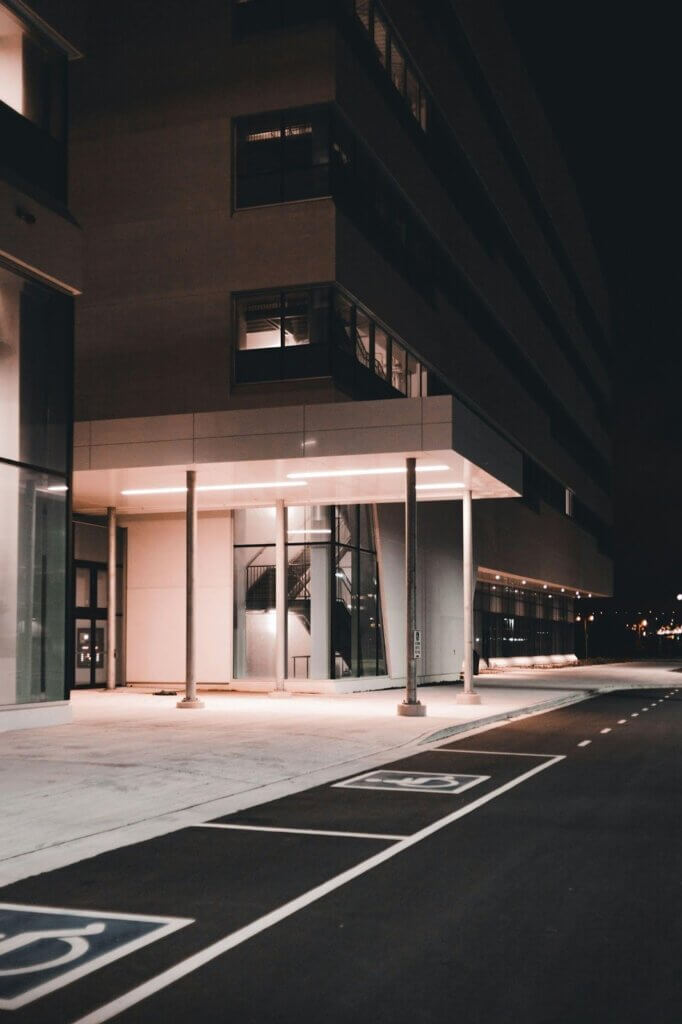
Choosing the right security model for your Aurora, CO property isn’t about which option sounds better on paper—it’s about matching the service to your actual coverage needs, risk profile, and operational hours. Property managers across Aurora face a common dilemma: should you invest in a standing guard at a fixed post, deploy vehicle patrol security across multiple zones, or combine both approaches? The answer depends on your property layout, tenant activity, budget constraints, and what you’re actually trying to protect.
Before you commit to any security plan, it helps to work with an experienced security guard company in Aurora, CO that understands the real-world demands of commercial properties, residential communities, and industrial sites in the metro area.
Quick Definitions (Vehicle Patrol vs Standing Guard)
Vehicle patrol security uses trained security professionals who patrol your property in a marked vehicle (and, when appropriate, conduct brief foot checks). Patrol is designed to cover more ground, spot issues early, and document conditions across multiple areas.
A standing guard (on-site guard) remains at a fixed post—typically a lobby, front desk, entrance gate, or loading area—throughout a shift. Standing guards are ideal when you need access control, visitor interaction, and immediate presence in one specific zone.
What Vehicle Patrol Typically Does:
- Drive perimeter checks around fenced boundaries and parking areas
- Verify gates, doors, and access points are secure
- Respond to alarm activations or tenant calls
- Conduct randomized interior checks (if authorized)
- Document lighting outages, graffiti, vandalism, or unauthorized vehicles
- Check for trespassers, loiterers, or suspicious activity
- Provide written shift reports with timestamps and findings
- Coordinate with local law enforcement when incidents require police response
- Perform lock-up or unlock services during off-hours
- Monitor construction sites for unauthorized access or equipment tampering
What a Standing Guard Typically Does:
- Greet visitors, tenants, and employees at a fixed entry point
- Verify credentials, check IDs, and manage visitor logs
- Monitor CCTV feeds from a central station
- Control vehicle and pedestrian access through gates or turnstiles
- Accept package deliveries and maintain sign-in/sign-out protocols
- Provide directions, answer questions, and offer customer service
- Observe foot traffic patterns and identify unusual behavior
- Call for backup or emergency services during incidents
- Enforce property rules (no smoking zones, parking violations, after-hours access)
- Maintain a visible, stationary deterrent at high-traffic locations
When Vehicle Patrol Beats Standing Guards in Aurora
Vehicle patrol makes sense when your priority is broad coverage rather than constant presence at a single point. Here are scenarios where patrol security in Aurora typically outperforms a standing guard:
Large Parking Lots and Surface Areas: If your property includes sprawling parking areas—common in Aurora’s business parks and retail centers—a standing guard can’t effectively monitor vehicles across multiple rows or distant sections. Mobile patrol covers the entire lot multiple times per shift.
Multiple Buildings on One Campus: Office complexes, apartment communities, and industrial parks with several buildings benefit from patrol officers who move between structures, checking doors and perimeters rather than watching one entrance.
Perimeter and Fence Line Monitoring: Properties with long fence lines, rear access points, or loading areas need regular perimeter checks. A vehicle patrol officer can inspect the entire boundary in minutes and spot breaches, cut fences, or unauthorized entry attempts.
After-Hours and Overnight Coverage: When your property is closed to the public and foot traffic is minimal, the value of a standing guard diminishes. Patrol officers provide cost-effective deterrence during nights, weekends, and holidays when buildings are vacant.
Vacant or Under-Construction Properties: Construction sites and vacant buildings face risks from trespassing, copper theft, and equipment loss. Regular vehicle patrol services discourage opportunistic crime without requiring a full-time guard at an empty property.
HOA and Community Drive-Throughs: Residential communities, townhome complexes, and condo associations often need visibility without the expense of 24/7 guards. Scheduled patrol visits create a security presence, check amenities, and respond to resident concerns.
Alarm Response and Follow-Up: If your property relies on electronic alarms, having patrol officers available to investigate activations is more efficient than assigning a standing guard to wait for potential alarms.
Gate and Lock Verification Rounds: Properties that close at specific times benefit from patrol officers who verify all gates are locked, overhead doors are down, and access points are secure before leaving the premises.
Budget-Conscious Multi-Site Coverage: If you manage multiple locations across Aurora or surrounding areas like Centennial or Parker, one patrol team can service several properties in a single shift—something impossible with standing guards.
What to Request in Your Patrol Plan
When contracting private security in Aurora for vehicle patrol, your service agreement should specify:
- Randomized route patterns (not predictable schedules)
- Frequency windows (e.g., 3–5 visits per night, spaced 1.5–2.5 hours apart)
- Defined checkpoints with GPS or scan verification
- Report delivery format and timing (emailed by end of shift, weekly summaries)
- Photo documentation policy for observed issues
- Lock checks and door-rattle protocols
- Lighting and maintenance observations
- Trespass and loitering response procedures
- Escalation process for incidents requiring law enforcement
- Supervisor oversight and audit frequency
- Communication cadence with property management
- Weather and accessibility contingencies
When Standing Guards Are the Better Choice
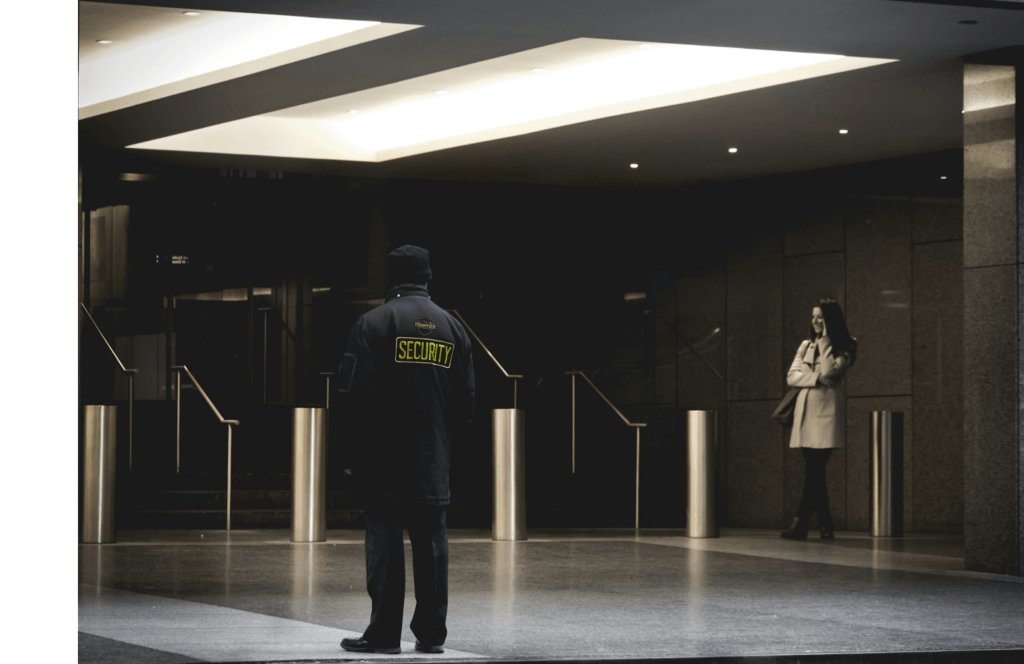
Some properties require the immediate response, access control, and customer interaction that only a stationary officer can provide. Standing guards outperform patrol in these situations:
Front Desk and Lobby Presence: Office buildings, medical facilities, and corporate campuses with steady foot traffic need a professional presence who greets visitors, screens credentials, and manages building access throughout business hours.
Visitor Management and Sign-In Systems: If your property requires all visitors to check in, sign out, and wear badges, you need someone at that desk continuously—not an officer who drives by periodically.
Package and Delivery Control: Properties with high delivery volume (residential lobbies, corporate mail rooms) benefit from guards who accept packages, verify recipients, and maintain chain-of-custody logs.
Access Control at Single Entry Points: Gated communities, parking structures, and facilities with one primary entrance often need a guard to open/close gates, verify resident credentials, and turn away unauthorized visitors.
High Foot Traffic Retail and Commercial Spaces: Retail centers, restaurants, and entertainment venues need visible deterrence where crowds gather. A standing guard addresses disturbances immediately and provides customer service.
Medical Clinics and Healthcare Waiting Areas: Facilities serving vulnerable populations benefit from guards who de-escalate tense situations, assist patients, and maintain a calm environment.
Employee Safety and Escort Services: Businesses with late-night shifts or employees who work alone may need on-site security guards to escort staff to vehicles, monitor employee-only areas, and respond instantly to panic alarms.
Special Events and Crowd Management: Concerts, community events, and seasonal gatherings require guards who manage entry lines, check tickets, and handle crowd flow—tasks impossible from a patrol vehicle.
Loading Dock and Delivery Supervision: Warehouses and distribution centers with constant truck traffic need guards who verify drivers, oversee loading operations, and prevent unauthorized removal of inventory.
What Success Looks Like
When you’ve chosen the right standing guard deployment, you should see:
- Consistent visitor screening that reduces unauthorized access and supports your entry policies
- Prompt response within the guard’s assigned post area, with clear escalation steps and documentation
- Professional interaction that enhances your property’s reputation
- Detailed logs showing who entered, when, and why
- Reduction in preventable issues (propped doors, tailgating, after-hours loitering)
For properties that also need unarmed presence without confrontation, consider evaluating unarmed security guards who focus on observation, reporting, and de-escalation rather than physical intervention.
The Hybrid Model (What Most Aurora Properties End Up Choosing)
In practice, few properties fit neatly into “patrol only” or “standing guard only.” Most Aurora property managers discover that a hybrid approach closes the gaps both models leave when used alone.
Standing Guard During Business Hours + Patrol Overnight: Office parks, retail centers, and business complexes often post a guard at the main entrance from 7 AM to 6 PM, then switch to vehicle patrol for overnight perimeter checks. This gives you access control when traffic is highest and broad coverage when the property is closed.
Patrol Most Nights + Standing Guard on Peak Days: Apartment communities and HOAs might run patrol services Sunday through Thursday, then add a standing guard on Friday and Saturday evenings when resident activity, guest traffic, and parking issues spike.
Standing Guard at Main Entrance + Patrol for Perimeter and Parking: Larger properties can station a guard at the primary access point while a patrol officer handles distant parking lots, rear gates, and outlying buildings. This combination ensures no area goes unchecked while maintaining controlled access.
The hybrid model reduces blind spots. A standing guard can’t see what’s happening three buildings away, and a patrol officer can’t screen every visitor. Together, they provide layered coverage that adapts to your property’s rhythm throughout the day.
Side-by-Side Comparison (Decision Table)
| Factor | Vehicle Patrol | Standing Guard |
| Visibility | Intermittent, mobile deterrence | Constant presence at one location |
| Coverage Area | Multiple zones, large properties | Single post or limited area |
| Access Control | Limited (lock checks, gate verification) | Direct management of entry/exit |
| Response Presence | Responds during scheduled rounds | Immediate response within assigned zone |
| Best Hours | After-hours, overnight, weekends | Business hours, high foot traffic periods |
| Typical Tasks | Perimeter checks, alarm response, documentation | Visitor screening, package control, customer service |
| Reporting Style | Written reports per shift with checkpoints | Incident logs, visitor logs, real-time updates |
| Budget Efficiency | Cost-effective for large/multi-site coverage | Higher cost, focused on single point |
| Ideal Property Types | Business parks, construction sites, vacant properties, HOAs | Lobbies, retail, medical, gated entries |
Common Mistakes When Hiring Patrol Security in Aurora (and How to Avoid Them)
Even experienced property managers make avoidable errors when setting up vehicle patrol contracts. Here’s what to watch for:
Mistake #1: Too Predictable a Schedule
If patrol officers arrive at the same time every night, the deterrent effect disappears. Anyone watching the property learns the pattern.
Fix: Require randomized visit windows and varied routes. Your contract should prohibit fixed schedules.
Mistake #2: Unclear Post Orders
Vague instructions like “check the property” lead to inconsistent service and missed issues.
Fix: Provide written post orders specifying which doors to check, what to photograph, when to call you, and how to handle common scenarios.
Mistake #3: No Reporting Standards
If you don’t define what you need in reports, you’ll get generic summaries that don’t help you track trends or identify problems.
Fix: Request timestamped reports with specific checkpoint confirmations, photos of concerns, and incident descriptions. Review samples before signing.
Mistake #4: No Escalation Protocol
When patrol officers encounter trespassers, vandalism, or safety hazards, they need clear guidance on when to call police, when to notify you, and when to handle it themselves.
Fix: Create an escalation matrix that defines minor issues (report only), moderate issues (call property manager), and serious issues (call authorities immediately).
Mistake #5: Choosing Patrol When Access Control Is the Real Need
If your problem is unauthorized visitors entering during business hours, a patrol officer who drives by twice a night won’t solve it.
Fix: Be honest about what you’re trying to prevent. If it’s access-related, you need a standing guard or controlled entry system.
Mistake #6: Not Coordinating With Tenants or Residents
Tenants who don’t know patrol officers are on-site may call 911 when they see an unfamiliar vehicle. Residents may not report issues if they don’t know how to reach the patrol team.
Fix: Notify tenants when patrol services begin, share contact info, and explain what officers will be doing.
Mistake #7: Ignoring Lighting and Camera Gaps
Patrol officers can only observe well-lit areas. If your property has dark zones or broken cameras, patrol effectiveness drops significantly.
Fix: Conduct a lighting audit before starting patrol services. Ask officers to note burned-out lights in their reports and prioritize repairs.
Mistake #8: Lack of Supervisor Checks
Without supervisor oversight, you can’t verify patrol officers are completing rounds as promised or following your instructions.
Fix: Choose a security guard company in Aurora that provides supervisor audits, GPS tracking, or checkpoint verification as part of the service.
Questions to Ask a Security Provider Before You Choose Patrol or Standing Guards
Before signing a contract for patrol security Aurora or standing guard services, get clear answers to these questions:
- Are your officers licensed and insured in Colorado? Verify they meet state requirements for private security.
- What training do officers receive beyond basic licensing? Look for customer service, report writing, de-escalation, and emergency response training.
- How do you dispatch and supervise officers in the field? Ask about GPS tracking, shift check-ins, and supervisor audits.
- How do you verify patrol visits actually happen? Request checkpoint systems (GPS, scans, photos) that prove officers completed rounds.
- Can I see sample reports before I commit? Review actual reports from other clients to assess quality and detail.
- What’s your incident escalation process? Understand when officers call you, when they call police, and how quickly you’ll be notified.
- How do you communicate with property managers during and after shifts? Clarify report delivery timing, emergency contact protocols, and ongoing updates.
- Will officers be uniformed and clearly identified? Visibility matters for deterrence and tenant confidence.
- What hours and days can you provide coverage? Confirm they can meet your schedule, including holidays and last-minute needs.
- How do you handle staffing gaps and callouts? Ask about backup procedures and guaranteed coverage commitments.
- What’s your procedure for officer rotation vs. consistency? Decide whether you want the same officers (who learn your property) or rotation (to prevent complacency).
- How do you handle non-emergency situations like noise complaints or parking issues? Clarify their role in minor tenant concerns vs. serious security matters.
Aurora-Specific Considerations
Aurora’s mix of residential communities, retail corridors, business parks, and ongoing construction creates diverse security needs across the city. Properties in Aurora range from high-density apartment complexes to sprawling industrial campuses, and each requires a different approach.
The city’s growth has brought more mixed-use developments, which often benefit from hybrid security models—standing guards during peak retail hours and mobile patrol for overnight property checks. Many Aurora properties share characteristics with neighboring areas like Centennial and Parker, where large parking lots and multi-building layouts make vehicle patrol particularly effective.
For properties near Denver or Commerce City, coordinating with a provider that serves the broader metro area ensures consistent service and faster backup response when needed. Aurora’s business parks and warehouse districts often require perimeter-focused patrol, while residential properties near major retail corridors may prioritize visible deterrence during evenings and weekends.
FAQs
How often should a vehicle patrol visit my property?
Multiple visits per shift, with varied timing based on footprint, hours, and after-hours activity. The goal is unpredictability and documented checks.. Higher-risk properties or those with recent incidents may increase frequency to hourly checks. The goal is unpredictability—varied timing prevents patterns that someone could exploit.
Is vehicle patrol enough for apartments and HOAs?
It depends on your community’s layout and concerns. Vehicle patrol works well for perimeter checks, parking enforcement, and amenity monitoring. However, if you need lobby access control, package management, or immediate response to resident disputes, consider adding a standing guard during peak hours or a hybrid model.
What’s the difference between mobile patrol and guard services?
Mobile patrol (vehicle patrol) involves officers who drive routes and check multiple locations. Guard services typically refer to standing guards at fixed posts. Both are licensed security professionals, but their deployment and tasks differ based on property needs.
Do patrol officers stop and get out of the vehicle?
Yes. Effective patrol includes foot checks—officers exit the vehicle to conduct foot checks as authorized (doors, gates, and access points) and document findings, inspect locks, check gates, photograph issues, and investigate anything suspicious. A patrol that never leaves the vehicle provides limited value.
What should be included in patrol reports?
Quality reports include arrival/departure times, checkpoint confirmations, any observed issues (lighting outages, open doors, trespassing, vandalism), photos of concerns, weather or access challenges, and any contact with tenants, police, or other parties. Reports should be delivered by end-of-shift or first thing the next morning.
Can I start with temporary patrol coverage?
Absolutely. Many Aurora property managers begin with short-term contracts (30–90 days) to assess effectiveness, especially for seasonal concerns, construction phases, or periods following incidents. Temporary coverage also works for vacant properties awaiting sale or redevelopment.
When should I add standing guards instead of just increasing patrol frequency?
If you find yourself needing patrol checks every 30–45 minutes, or if your concerns center on access control and visitor management, a standing guard becomes more cost-effective and responsive than trying to achieve constant coverage through patrol alone.
Make the Right Choice for Your Aurora Property
Choosing between vehicle patrol security in Aurora, CO and standing guards isn’t about picking the “better” option—it’s about matching your security strategy to your property’s layout, hours, risks, and budget. Many Aurora properties discover that a combination approach delivers the visibility, coverage, and access control they need without paying for services that don’t fit their situation.
The best next step is a site assessment. Walk your property with an experienced security provider, identify your coverage gaps, and build a plan that makes sense for your specific needs. Whether you need perimeter patrol, lobby presence, or a hybrid model, the right partner will customize a solution rather than pushing a one-size-fits-all package.
Ready to explore your options? Request a quote from Frontier Security Guard & Patrol, and we’ll schedule a no-obligation consultation to assess your Aurora property and recommend the most effective security approach.
