
Summer brings a different rhythm to downtown Denver. Outdoor festivals, concerts, sporting events, street celebrations, food events, and other seasonal activities can bring more visitors into the city center and create heavier pedestrian and vehicle traffic around commercial properties.
For downtown office buildings, that extra activity can create security challenges that are not as common during a normal business week. Building entrances may experience more foot traffic, parking garages can become busier, sidewalks may fill with visitors, and employees may encounter road closures or altered access routes. People attending nearby events may also look for restrooms, parking, shortcuts, or indoor spaces, increasing the possibility of unauthorized access.
This does not mean downtown events should be viewed as a security problem. They are an important part of the city’s activity and economy. However, property managers should recognize that downtown Denver office security may require additional planning during high-traffic summer periods.
A layered strategy involving access control, security patrols, visitor procedures, parking-area monitoring, surveillance, and emergency preparation can help commercial buildings remain organized while activity outside increases.
Understand How Summer Events Change the Security Environment
The biggest change during summer festivals is often not the building itself. It is the environment surrounding it.
On a typical weekday, property management may have a fairly predictable understanding of who enters the building and when. Employees arrive during normal business hours, scheduled vendors use designated entrances, and visitor traffic follows familiar patterns.
A major event nearby can change that quickly.
Property managers may see:
- Increased pedestrian traffic near entrances
- More vehicles searching for parking
- People attempting to enter private garages
- Visitors gathering near office doors
- Increased use of sidewalks and loading zones
- Changes to normal traffic patterns
- Road closures or restricted vehicle access
- More activity after normal business hours
- Delivery disruptions
- Increased demand on lobby and front-desk staff
These conditions can make it harder to distinguish employees, scheduled guests, vendors, event attendees, and people who should not have access to the building.
That is why building security in Denver should account for what is happening outside the property as well as inside it.
Review Access Control Before Festival Weekends
Controlled access becomes especially important when large numbers of people are moving through downtown.
Office buildings should review exterior entrances before major summer events and make sure doors, access-card systems, elevators, gates, and other entry points are functioning properly.
Frontier Security Guard & Patrol lists controlled access as part of its Denver building-security services, including employee badge enforcement, visitor logging, and securing entrances and exits.
Property managers should consider reviewing:
- Employee badge access
- Visitor check-in procedures
- Side and rear entrances
- Loading dock access
- Parking garage entrances
- Stairwell doors
- Elevator access
- After-hours entry procedures
- Contractor credentials
One common issue during crowded events is tailgating. An employee may use a badge to enter while someone unfamiliar follows closely behind.
Employees should be reminded not to hold secured doors for people they do not know, even when sidewalks and lobbies are unusually crowded.
Prepare the Lobby for Increased Foot Traffic
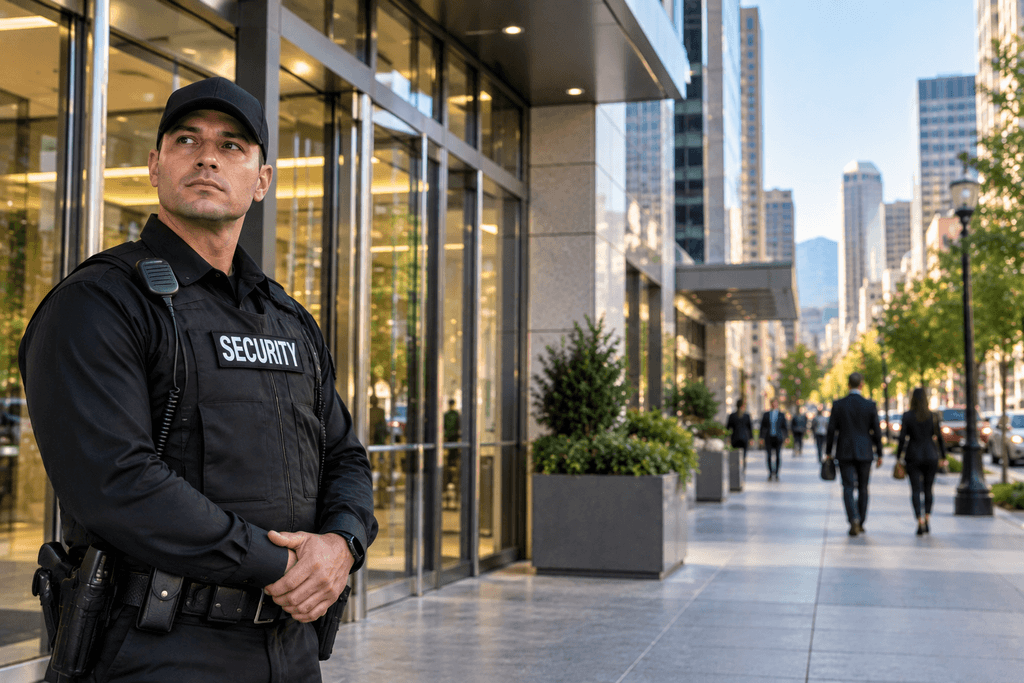
The lobby is often where private office space meets public activity.
During summer festivals, event attendees may enter a building unintentionally while looking for parking information, restrooms, directions, air conditioning, or access to another nearby property.
A clear lobby-security procedure can help staff respond consistently.
Reception or security personnel should know:
- Who is permitted beyond the lobby
- How visitors are verified
- How deliveries are handled
- What identification is required
- Whether tenants must approve guests
- Which elevators or floors require credentials
- How to handle someone who refuses to leave
The objective should be professional access management rather than confrontation.
For buildings with heavier seasonal traffic, unarmed security guards in Denver can provide a visible presence while helping manage entrances, visitors, and established property procedures. Frontier offers unarmed guard services for both short- and long-term assignments.
Give Parking Garages Extra Attention
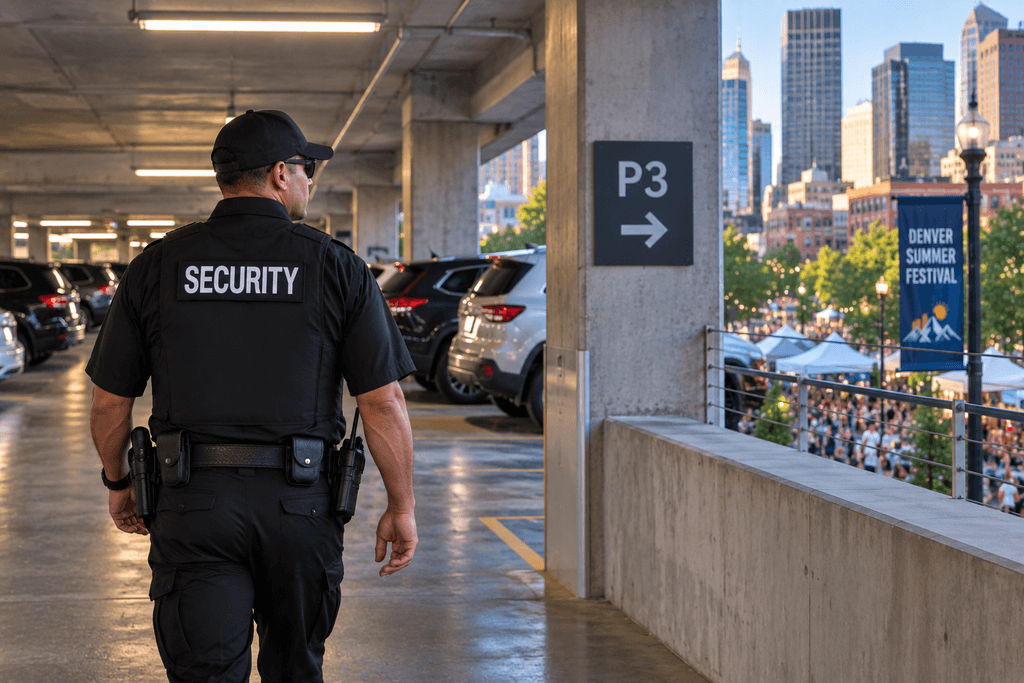
Parking areas may experience some of the largest changes during downtown events.
Visitors unfamiliar with the area may attempt to enter private office garages, use reserved spaces, follow authorized vehicles through gates, or leave vehicles where they interfere with normal operations.
Property managers should review:
- Garage access systems
- Vehicle gates
- Reserved parking signage
- Employee parking procedures
- Pedestrian entrances
- Lighting
- Security-camera coverage
- Stairwells and elevators
- Loading areas
Security personnel can also include parking garages in regular patrol routes.
A garage should not be treated as separate from the office-security plan. In many buildings, it provides direct access to elevators or interior areas. If garage entry is poorly controlled, someone may be able to bypass the main lobby entirely.
Adjust Security Patrols for Changing Activity
Security patrol schedules that work during ordinary weeks may need adjustment during a major downtown event.
For example, the building may see very little activity at 7 p.m. on a normal Saturday but heavy pedestrian traffic during a festival or concert weekend.
Property managers may consider increasing attention around:
- Exterior entrances
- Parking garages
- Loading docks
- Alleys
- Ground-floor windows
- Sidewalk-facing areas
- Stairwells
- Common areas
Frontier’s building-security services include regular interior and exterior patrols, gatekeeping, vehicle monitoring, and enforcement of facility rules based on client needs.
The patrol plan should reflect actual property conditions rather than simply following the same schedule year-round.
Strengthen Surveillance Around High-Traffic Areas
Security cameras become particularly useful when the area surrounding a building becomes more crowded.
Before a major event, property management should confirm that cameras covering critical locations are operating properly.
Priority areas may include:
- Main lobby entrances
- Side doors
- Loading areas
- Parking garages
- Elevator entrances
- Exterior walkways
- Employee-only areas
Cameras should have a clear view and adequate lighting.
Property managers should also confirm that footage is recording and can be retrieved if an incident needs to be reviewed later.
Surveillance works most effectively as part of a broader security system. Cameras can provide visibility and documentation, while trained personnel can monitor activity and respond according to the building’s procedures.
Coordinate With Tenants Before Major Events
Office tenants also play an important role in commercial building security in Denver.
Before a large nearby event, property management can send a brief communication explaining any changes that may affect employees.
Information might include:
- Modified building hours
- Parking restrictions
- Road closures
- Alternate entrances
- Visitor procedures
- Delivery changes
- After-hours access rules
- Emergency contact information
Employees who understand what to expect are less likely to prop open doors, bypass security procedures, or become confused when normal building access changes.
Tenant communication can also reduce unnecessary calls to management when the surrounding area becomes unusually busy.
Review Delivery and Contractor Access
Downtown events can interfere with normal delivery schedules.
Street closures, heavy traffic, restricted curb access, or temporary staging areas may force drivers to approach a building differently than usual.
Property managers should determine whether deliveries need to be redirected to:
- A loading dock
- A secondary entrance
- A designated delivery time
- A secure package area
Contractors should also remain subject to normal verification procedures even when activity outside the property is high.
Crowds should not become a reason to relax access procedures.
Protect Restricted and Back-of-House Areas
During busy events, the main lobby receives most of the attention. However, side entrances and service areas may present equal or greater concerns.
Security reviews should include:
- Mechanical rooms
- Storage areas
- Loading docks
- Maintenance spaces
- Roof access
- Utility rooms
- Employee-only corridors
Doors should remain secured, and temporary vendors or contractors should only have access to areas needed for their work.
When public spaces around the building are crowded, less visible access points should not be overlooked.
Prepare for After-Hours Activity
Many summer festivals continue into the evening, meaning downtown can remain active long after office employees have left.
Buildings that are normally quiet after business hours may find themselves surrounded by pedestrians, rideshare vehicles, traffic, or event-related activity.
This can make after-hours office security in Denver especially important.
Property managers may consider:
- Confirming exterior doors automatically lock
- Increasing patrol frequency
- Monitoring parking areas
- Checking side entrances
- Providing employee escorts when appropriate
- Monitoring lobby activity
- Reviewing exterior cameras
Frontier’s building-security page notes that occupant support can include escorting employees after hours, while its general-security services include building patrols and vehicle monitoring.
These services may be particularly relevant for employees leaving offices late during crowded downtown events.
Prepare for Emergency Access and Evacuation Changes
Major events can also affect emergency planning.
Crowds, temporary barriers, street closures, and altered traffic patterns may affect normal emergency access or evacuation routes.
Property managers should review whether:
- Emergency exits remain accessible
- Fire lanes remain clear
- Loading areas are obstructed
- Assembly areas are still appropriate
- Emergency vehicles can reach the property
- Staff know alternate routes if necessary
Emergency procedures should also be communicated to security personnel.
Frontier includes emergency preparedness among its building-security services and works with facility management teams to review security measures and incident reports.
Security personnel should support established emergency plans rather than improvising procedures during an incident.
Consider Temporary Security for High-Traffic Weekends
Not every office building needs additional security throughout the entire summer.
Some properties may only need more coverage during specific weekends, major events, or unusually high-traffic periods.
Temporary coverage may be useful when a building expects:
- Increased pedestrian activity
- Extended tenant hours
- Large corporate gatherings
- Unusual parking demand
- Road closures near the property
- Heavy evening activity
Frontier Security Guard & Patrol offers temporary security for commercial offices and other properties, including situations involving special events and high-traffic conditions.
This can allow property managers to increase coverage when conditions change without necessarily modifying the building’s normal year-round security plan.
Use a Layered Building Security Plan
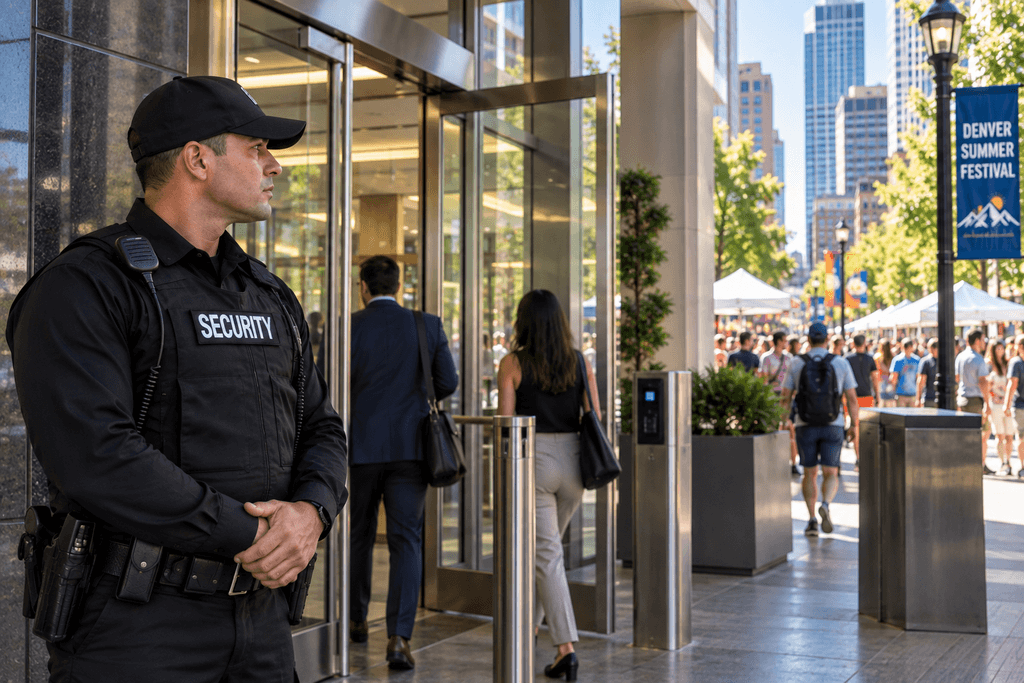
No single measure can address every security concern created by a busy downtown environment.
A stronger plan combines several layers.
Access control helps limit entry to authorized employees and visitors.
Security guards provide visible monitoring and support established building procedures.
Patrols extend security coverage to garages, exterior areas, and less-visible access points.
Surveillance cameras provide additional visibility and incident documentation.
Tenant communication helps employees understand temporary security changes.
Emergency planning prepares the building for unexpected situations.
These measures should support one another rather than operate independently.
For example, a camera can show that someone entered a garage, but controlled access can help determine whether that person should have been there in the first place. A security guard can observe lobby activity, while tenant communication can reduce confusion about visitor procedures.
Final Thoughts
Denver’s summer festivals and downtown events bring energy, visitors, and activity to the city. For office-property managers, however, they can also change the security environment surrounding a building.
More pedestrians, increased parking demand, road closures, after-hours activity, and unfamiliar visitors can place additional pressure on entrances, garages, lobbies, and other access points.
Improving downtown Denver office security does not mean restricting legitimate activity. It means preparing the building so normal operations can continue even when the surrounding area becomes unusually busy.
Review access control before major events. Monitor parking areas. Adjust patrols when needed. Confirm cameras are operating. Communicate with tenants. Protect back-of-house areas. And make sure emergency procedures still work under changing downtown conditions.
Frontier Security Guard & Patrol provides building security services in Denver for business offices, commercial properties, corporate facilities, and other organizations. Its building-security services include controlled access, occupant support, interior and exterior patrols, vehicle monitoring, and emergency preparedness, with unarmed and temporary security options available based on property needs.
If your downtown office building needs additional security during summer festivals or other high-traffic periods, contact Frontier Security Guard & Patrol at (720) 965-5900 to discuss a security plan tailored to your property.
